


DEGREE-GRANTING PROGRAMMES
Since the years of its existence, IIMB has developed a portfolio of vibrant
programmes.
It is committed to training individuals who will excel in their area of research by publishing quality work of international standard.
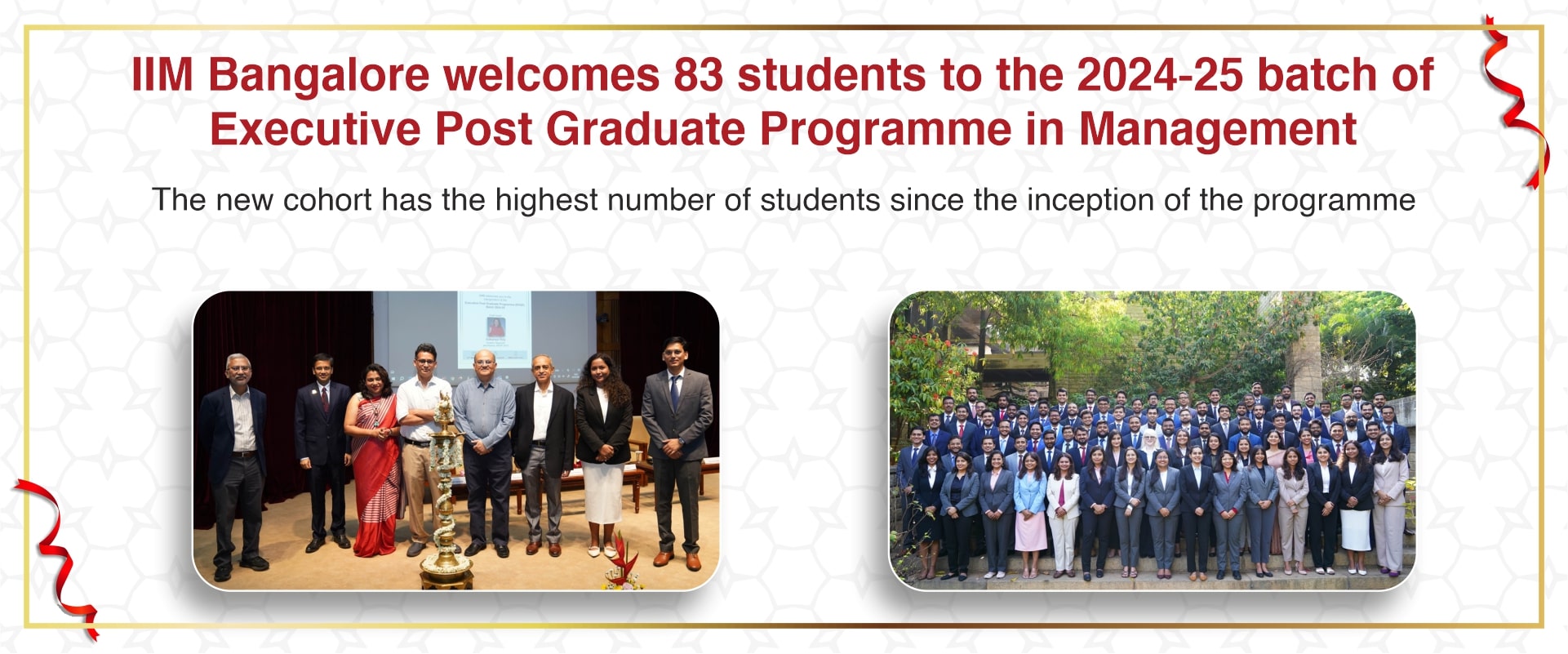
The Executive Post Graduate Programme in Management (EPGP) is an intensive one-year, fulltime programme designed to enhance skills and capabilities essential for responsible positions at senior management levels. Challenging and globally-oriented, the objective of this programme is to produce future leaders who can handle a dynamic corporate environment.
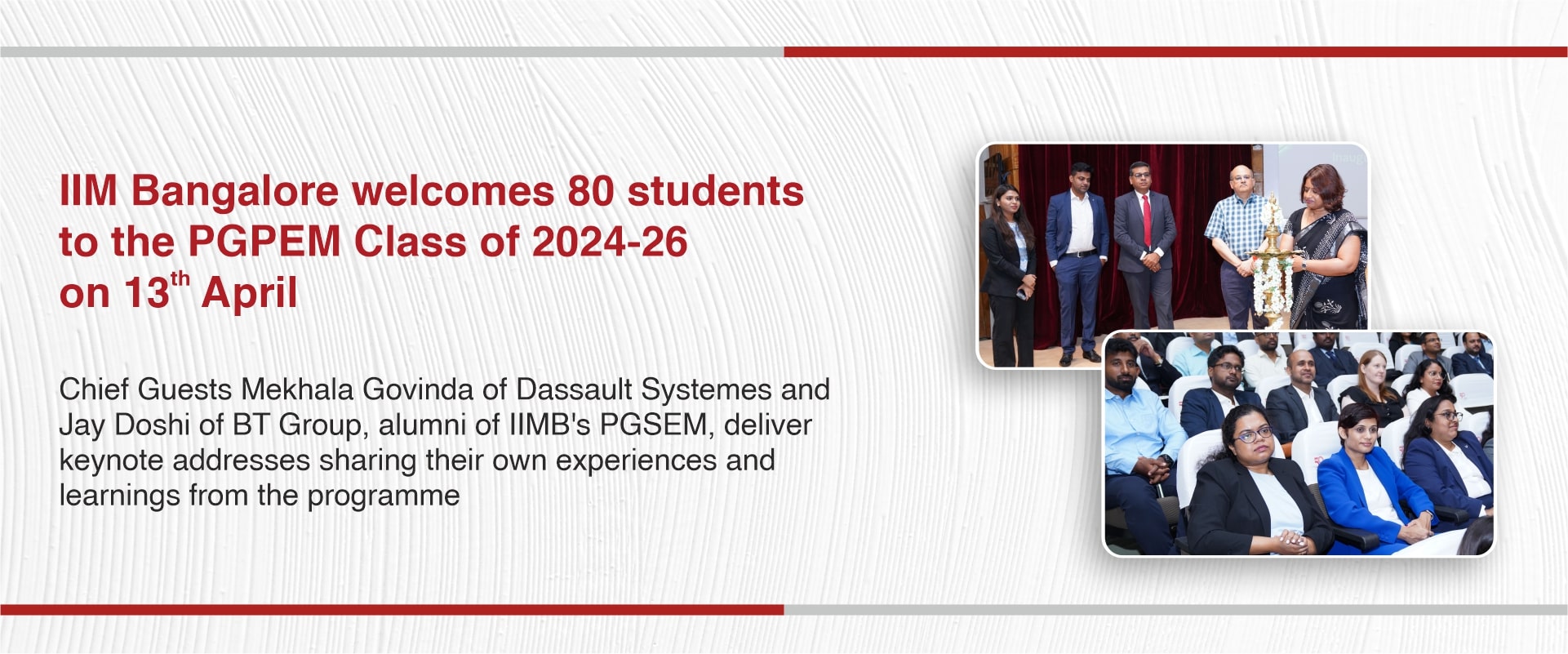
The Post Graduate Programme in Enterprise Management (PGPEM) is designed for middle and senior level working professionals. Participants learn from world-class faculty, while strengthening their network through collaboration with peers during their on-campus sessions.
The Post Graduate Programme in Management (PGP) is designed to equip students with skills and capabilities that will enable them to reach responsible global leadership positions. The PGP revolves around the principle that world-class business leaders are not mass-produced; they are nurtured and developed in a practical application-oriented, user-friendly environment.
Catalyzed by the Government of India and the United Nations Development Programme, the Post Graduate Programme in Public Policy and Management (PGPPM) is packed with path-breaking insights about winning policymaking and management strategies.
The Post Graduate Programme in Business Analytics is a multidisciplinary programme intended to equip students to solve business and social problems.
CERTIFICATE PROGRAMMES
Since the years of its existence, IIMB has developed a portfolio of vibrant
programmes.
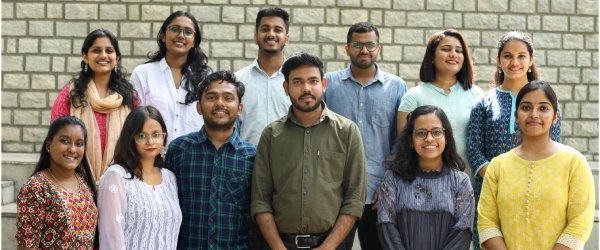
N. S. Ramaswamy Pre-doctoral Fellowship (NSR Pre-doc)
The N. S. Ramaswamy Pre-doctoral Fellowship is a highly selective programme instituted with the aim to increase social diversity of management academia in India.

Mahatma Gandhi National Fellowship
The Mahatma Gandhi National Fellowship (MGNF) is an opportunity for young, dynamic individuals to contribute to enhancing skill development and promote economic development.